Choosing Fencing Height and Style for Maximum Charm
A fencing is just one of those home upgrades that individuals observe instantly, also when they can not name why. It transforms the way a front yard structures the street, how a backyard really feels when the sun drops behind the trees, and how safeguarded you actually are at the moments that matter, like late evenings, celebrations, or youngsters going out the back door.
The catch is that fencing elevation and design are not separate choices. A taller fencing can look heavy if the design is incorrect. A lighter, much more open style can feel inviting but still miss the functional objective you desired. If you hire fencing contractors or a fence company, you will rapidly find out that the best result comes from pairing aesthetic appeals with actual site conditions, regional regulations, and daily habits on the property.
Below is how I approach fence selection when the objective is maximum charm without compromising personal privacy, air flow, or budget.
Start with what the fencing needs to do, not what it needs to look like
People commonly start snappy photos. That is all-natural. But even a sensational layout can dissatisfy if it does not fix your real problem.
On one project years ago, the homeowners demanded an attractive metal design they enjoyed. The look was lovely, tidy lines, and it mounted their deck like jewelry. Then the initial hurricane rolled in, and eviction did not close flush because the fence line had subtle disproportion. The steel still looked fantastic, yet the sensible assumption, "no spaces," did not match truth. After changes and far better alignment, it enhanced, however the lesson stuck: you need both layout and feature attended to prior to the very first blog post goes in.
So, ask on your own questions that seem nearly dull, due to the fact that they stop expensive regret:
- Do you want privacy from neighbors, or just a sense of boundary?
- Is the main concern pet dogs, children, or passersby?
- Will you mount planters, climbers, or lighting along the fence line?
- Do you appreciate wind resistance more than visibility?
- How often do you open and close gates?
Your solutions guide everything else: elevation, material, pick spacing, and also which instructions the fence faces.
Height is a mix of privacy, proportion, and regulation
Fence elevation is where expectations and reality collide frequently. A fence that is "intended to be" tall in your mind might breach a community guideline. Or it may be enabled, however only in particular areas, like side backyards, not front yards.
A fencing contractor will generally know regular neighborhood limits, but rules vary by area, and enforcement can differ by community. Several areas deal with front backyard secure fencing in different ways from side and rear. Some have actually elevation caps determined from grade at the highest point. Others appreciate the fencing being "solid" versus "open," which can affect approvals.
Even when a fencing height is legal, it still has to look right.
The visual mathematics lots of people miss
A fence is a vertical wall. Visual weight depends on two points: exactly how high it is and how visually constant the surface area shows up. A solid panel at 6 feet can really feel imposing, while a picket style at 6 feet with wide spacing can really feel ventilated and friendly.
This is why 2 fencings with the same gauged height can develop entirely various visual allure. When consumers bring me pictures, I attempt to equate them into real proportions on their lot.
If you have a tiny front backyard, tall solid fence has a tendency to ingest the area visually. If your home has solid vertical components, like high home windows or a gable, a somewhat taller fencing can balance. If the home is low and horizontal, way too much fencing elevation can make whatever feel compressed.
Practical privacy is frequently concerning spaces, not simply height
People speak about "personal privacy" like it is a single button. Actually, it has to do with how much can be seen through. That is why pick spacing, slat setup, and even the presence of lattice issue as long as height.
For instance, a 4-foot fencing with dense panels could obstruct views better than an open 6-foot picket. If neighbors are at comparable eye degree, tiny watching gaps become recognizable quickly. If they rest lower or the line of sight is obstructed by a berm or landscape design, you may be able to go shorter without shedding the sensation of seclusion.
Choosing the appropriate height by where the fence sits
Not every side of the residential property requires the exact same height or design. Most homes benefit from a deliberate gradation: an extra inviting front, a more private rear, and functional side backyard fencing that looks clean and withstands wear.
You can believe in regards to areas, also if you do not classify them in this way when you talk with a fencing company.
Front lawn: visual charm initially, privacy second
In the front yard, allure is not optional. The fence becomes part of the impression, and it likewise alters just how your home "reads" from the street.
A lower account fence or a style with visibility often works finest. If your goal is limit rather than testing, a design with spacing, attractive tops, or a small height keeps the front sensation inviting. The trade-off is that you will still see activity past the fencing line, so privacy is restricted unless you add planting.
If you truly need front-yard privacy, you can still make it look excellent, but the design needs to be lighter and a lot more willful. A strong fencing can be softened with landscape design, worked with gateway equipment, and a shade that blends with your outside instead of battling it.
Side lawns: functional, constant, and simple to maintain
Side yard fences obtain much less attention from site visitors, yet they take even more hits from truth. They are where gateways rub, where mowers and trimmers toss particles, and where pets decide to check boundaries.
Consistency issues here. A fencing that changes elevation mid-run without a good factor can look unintended. Also, side backyard lines usually have more uneven ground, so you want a material and post technique that tolerates sloping without developing into a wavy mess.
If you have a driveway, consider just how gates line up and how the fencing line helps or prevents access. A fencing contractor can recommend on positioning for smoother maintenance and fewer accessibility migraines later.
Rear backyard: personal privacy, wind, and the way you live outside
In the backyard, you are handling the moments that shape whether a fencing seems like an upgrade or a regret. When you host, when children play, when you grill, or when you sit quietly, you want convenience without consistent visual contact.
Rear lawn fences can usually be taller and much more solid. Still, style matters. Some strong fences seem like a shelter, which is wonderful for tranquil personal privacy. Others feel like a boundary you can not get away, particularly if the backyard is narrow.
If your yard is little, a taller fence can make it really feel enclosed. Because situation, take into consideration a slightly shorter elevation paired with a style that obstructs sight lines. A thick display section, or a combination of personal privacy panels with decorative tops, can give you the "safeguarded" feeling without https://s3.us-east-005.backblazeb2.com/drilledhard/timber-fencing/timber-fencing-installations-for-swimming-pool-safety-and-security.html transforming the lawn right into a corridor.
Fence design is the genuine chauffeur of "expensive" looking results
Height is quantifiable. Design is expository. And design is where you can definitely make a fencing resemble it belongs with your home as opposed to pasted onto it.
When I chat with customers that want a strong appearance, I often find they are not choosing a style yet, they are selecting a state of mind. Do you want modern and clean? Traditional and warm? Rustic and all-natural? Decorative and refined?
Here is how I arrange design decisions in such a way that stands up in the actual world.
Modern: crisp lines, less aesthetic interruptions
Modern fencings often tend to look finest when the finish is uniform and the geometry is consistent. That typically means straight runs, clean articles, and panels that line up nicely. If you like the look of horizontal lines, make sure the spacing and cap details are clean sufficient that little imperfections do not stand out.
Modern styles can still offer personal privacy if you select the best panel system. The compromise is that any type of installment misalignment looks more obvious. That is why "employing a fence company" is not nearly enough. You want the fencing contractor that takes note of layout, tight resistance positioning, and entrance hardware details.
Traditional: heat, rhythm, and acquainted proportions
Traditional styles, like pickets or classic board fences with attractive aspects, commonly match most neighborhoods. The secret is picking the ideal choice spacing or board density so the fence really feels intentional.
Traditional fences can likewise be a good concession if your front lawn requires curb allure. Several home owners choose a decorative top rail or slight variation in board surface to create visual rate of interest without overdoing it.
Rustic: structure and all-natural blending
Rustic does not suggest sloppy. It implies you embrace an all-natural appearance, usually with timber grain, weathered coatings, or materials that create a softer edge versus plants.
The compromise with rustic designs is maintenance. Wood will certainly weather. Shade may drift. You can prepare for that, yet you can not disregard it. If you desire the rustic appearance with less upkeep, some composite and metal options imitate texture without the same level of staining and sealing.
Decorative metal: style with a boundary
Decorative steel can festinate and lasting, specifically when the surface matches your outside hardware shades. It is additionally superb when you desire boundary control without obstructing sights completely.
The restriction is personal privacy. Metal commonly gives presence, even when it is high. If personal privacy is a must, you will require either a different fencing type or a style method that includes slats, close spacing, or adjacent screening with planters.
Pick the product like it is part of the design, since it is
Style and product are attached, also if sales brochures attempt to divide them.
Wood fences feel warm and mix with planting. They can be shaped right into several traditional designs. They likewise require attention, particularly in climates with hefty rain, freeze-thaw cycles, or solid sun.
Composite fences can provide a consistent look over time. They typically withstand the fading and warping that can make wood appearance tired. The trade-off is that the look is much more standard. If you desire the unique grain and natural character of wood, compound might feel also uniform.
Vinyl often tends to look clean with less maintenance. It can function well for family members that desire a refined look. The compromise can be expense and, relying on your climate, just how it manages temperature swings.
Metal can last a long time and handle weather condition well. It also has a tendency to look "crisper." That can be best for modern homes and some traditional ones too.
When you are speaking with fencing contractors, ask how they advise product selections based on your climate and lawn design. The best fence company will certainly talk about more than cost. They will speak about lasting upkeep, expected wear points, and how gate systems do after a couple of seasons.
Gates and edges: the details that determine whether it really feels premium
A great deal of people obsess over fence panels and forget the components that your hand touches and your eye tracks.
Corners matter due to the fact that they set the entire aesthetic line. If edges look careless, the fencing looks careless, also if the panels are excellent. Gates issue due to the fact that they expose craftsmanship every single time you use them.
A gateway that droops a little after a season makes the whole fencing feel much less looked after. A lock that does not straighten makes also an attractive fencing annoying. And a gateway that massages on the ground can become an ongoing chore.
From experience, I deal with gateways like the centerpiece of the system. You can have a gorgeous fence, however if eviction equipment and hinges are not picked for eviction size and expected loads, the financial investment will feel unfinished.
When you meet with a fencing contractor, ask just how they take care of entrance alignment on uneven ground. Ask what they do to maintain blog posts plumb in time. The solutions inform you exactly how seriously they take durability.
A fast, reality-based method to elevation and design pairing
This section is where I aid you translate objectives into options. Utilize it as a starting factor, not a last manuscript. Your yard incline, neighborhood guidelines, and your upkeep tolerance will still shape the last answer.
If you need maximum personal privacy and you are okay with a much more encased feeling, taller and denser designs win. If you desire boundary meaning with a lighter mood, a much shorter height with denser choice spacing can outmatch a taller open fence.
Here is a simple method to mount it:
- For privacy testing, focus on denser paneling and smaller watching voids before you go after extra height.
- For curb appeal, pick the most affordable elevation that sustains your goals, then use style information to maintain it attractive.
- For little great deals, use aesthetic visibility, like choice spacing or lighter styles, to avoid the lawn from feeling boxed in.
- For windy areas, lean toward sturdier materials and layouts that resist racking, not simply taller heights.
- For maintenance-sensitive houses, match the design to a product you will really keep up with season after season.
That last point is not a disposable. I have actually seen people purchase the "best" rustic wood fencing and then hate the maintenance. You do not require to child a fencing, yet you do require to devote to the upkeep strategy if you want it to keep looking right.
Dealing with slopes, qualities, and the "uneven fence" fear
Uneven ground is an actual trouble. The fence line complies with the grade, and the globe does not be available in perfectly level rectangles.
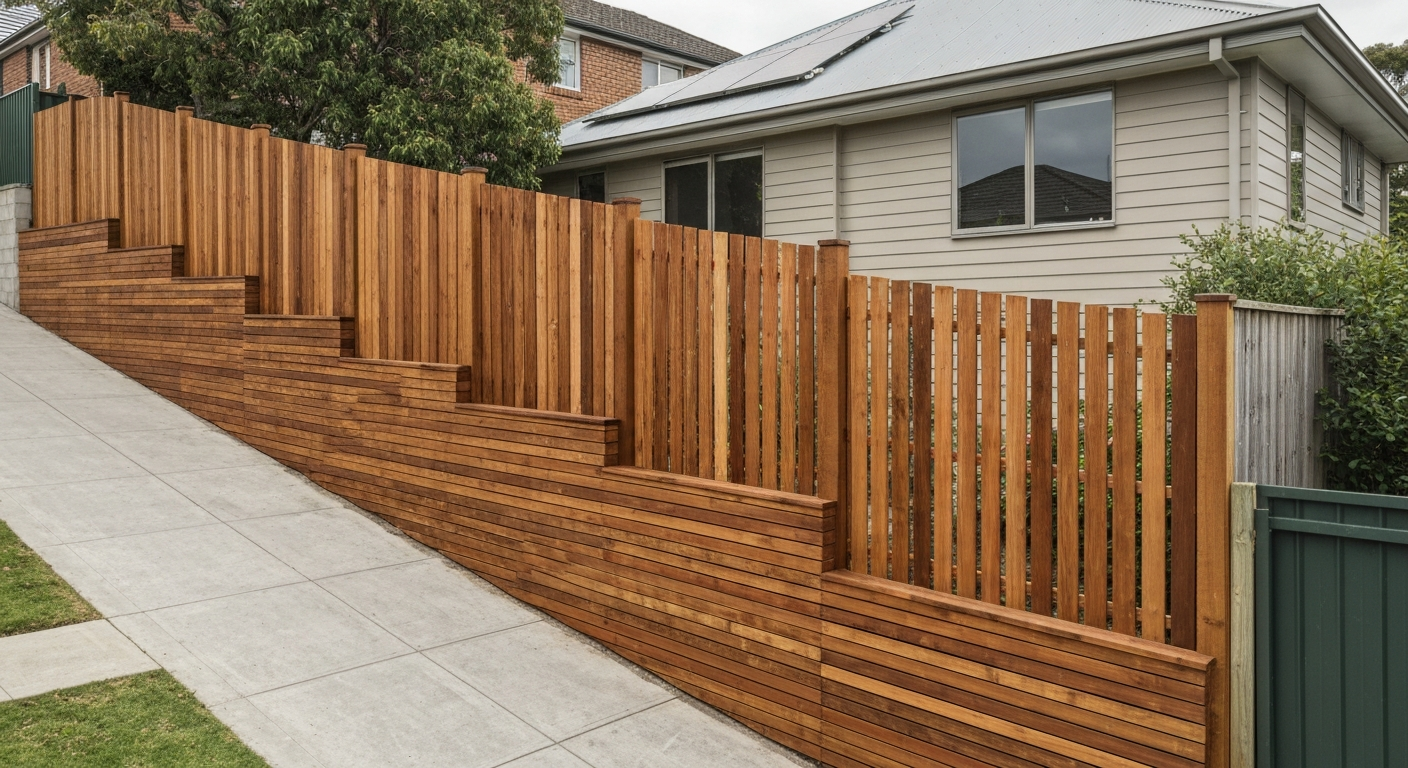
There are two broad strategies: stepping the fence along the incline or maintaining it level and permitting some variant in space elevation under the fencing. Tipping normally looks more regular and natural on slopes, yet it can develop noticeable elevation leaps. Keeping it degree can look clean, however it may create a bottom space that minimizes privacy and lets small pets through.
If your home has a noticeable incline, your fence company need to review this prior to buying materials. Any kind of good fencing contractor will certainly stroll the line, mention the high and low factors, and recommend how to keep both visual appeals and function.
A common compromise is to step in a manner in which keeps the general silhouette consistent, then include personal privacy testing or landscape design where gaps happen. It is far better to prepare for those realities than to hope the slope will certainly behave.
Color, caps, and trim: ending up touches that elevate the whole look
Height and design set the instructions. Finishing information make it feel finished.
Fence caps are a big offer. An appropriately made cap safeguards the leading sides of boards and boosts the visual account. Cut details at articles make the fence look willful rather than developed quickly.
Color also matters. Dark colors can look costs and hide dirt, but they can soak up warmth and may emphasize dirt and water detecting depending on material. Lighter shades can make small backyards really feel bigger, however they can reveal discoloration or scuffs more easily.
If you are matching the fence to outside elements, take into consideration the shades you already have: shutters, door hardware, trim, garage doors. It is simpler to dedicate to a fencing color that ties right into what is already on the home.
Maintenance factors to consider that affect your "optimal charm" over time
A fencing that looks excellent on mount can look weary quick if upkeep is neglected. People usually discount this, then ask yourself why the "very same style" in an additional area looks better.
Your fencing material determines how much initiative you require. Yet despite type, there are a couple of maintenance truths that show up over and over:
- gates normally require one of the most attention due to the fact that moving parts loosen over time
- fasteners and hardware rust first in severe climates
- debris buildup can blemish surface areas and catch moisture
- vegetation can discolor or harm fences if it overgrows versus panels
If you are the type that desires a set-it-and-forget-it upgrade, select materials and styles that match that lifestyle. A fence service provider that thinks past the set up day will certainly aid you plan for the long term.
Two usual fencing errors that set you back more than you think
Even wise home owners obtain floundered, generally due to the fact that they focus on a solitary priority.
Mistake one: choosing elevation initially, after that discovering gaps
People select an elevation like 6 feet, due to the fact that it sounds like the privacy number. After that they discover that choice spacing or panel style still permits sight lines. The fix is not constantly replacing the fence, but it can entail including panels, adding screening, or cutting vegetation tactically. Those attachments become a second budget.
Mistake 2: choosing a design that encounter the home's lines
A modern-day fence on an extremely standard facade can feel off. A rustic design on a clean-lined modern home can look momentary instead of natural. The fencing is an aesthetic frame. When the framework and photo do not match, people feel it also if they can not describe it.
A specialist fence company will steer you away from options that look good only in an image angle.
Questions to ask your fence specialist prior to you sign
If you desire optimal charm and minimum shocks, interview your fencing contractor like you would any kind of vital trade.
You can find out a lot by asking functional, details questions. Below is a brief collection that generally gets genuine solutions fast:
- What elevation will you gauge from, and how do you handle sloped ground?
- How will certainly you handle gates so they stay aligned over time?
- Which product and style is best for privacy in my yard, not just "total look"?
- What upkeep do you recommend for this certain fencing type and finish?
- What neighborhood authorization or policy checks do you assist with, and what can I anticipate for approval?
Pay attention to exactly how they respond. The most effective fencing contractors do not simply offer alternatives. They describe compromises clearly.
Putting all of it with each other: a vibrant fence option that still feels smart
Maximum appeal originates from self-confidence that the fence matches your residential or commercial property and your life. The ideal height offers you the comfort you want. The ideal design offers you the look you will enjoy when you pull up to your driveway.
If you are aiming for personal privacy without turning your backyard right into a box, concentrate on density and sight line control before you chase after extra height. If you want an inviting curb existence, select openness and proportion, then update the details, like caps, trim, and gateway hardware.
And if you are hiring a fence company, bring your goals, yet likewise bring your inquiries regarding slopes, gaps, and how the system performs after the initial period. A fence is not simply an exterior feature. It is a long-lasting framework that must work as hard as it looks.
When you make those decisions attentively, the end outcome is noticeable. People do not simply see a fencing. They see the treatment behind it.